

If you’re preparing for a job interview in the UK, particularly within the Civil Service or a fast-growing private sector organisation, you are almost guaranteed to encounter questions about your ability to work quickly and efficiently.
It is completely normal to feel a bit of dread when asked, “Can you give an example of a time you had to deliver at pace?” The phrase itself can make you feel rushed. However, taking a step back to understand what the interviewer is actuallylooking for will help you ground your answer in reality and showcase your genuine competence.
Here is a straightforward guide to breaking down the “delivering at pace” behaviour and structuring an answer that hits all the right notes.
What Does “Delivering at Pace” Actually Mean?
A common misconception is that delivering at pace means working franticly or putting in 14-hour days to get a project over the line. This is not the case. Employers are not looking for someone who runs around like a headless chicken, nor do they want someone who sacrifices quality for speed. Instead, they are looking for evidence of:
- Prioritisation: Can you figure out what is urgent versus what is important?
- Focus: Can you maintain momentum and stay on track despite distractions or changing parameters?
- Resilience: Do you remain calm and constructive when deadlines are tight?
- Communication: Do you keep your team and stakeholders in the loop when timelines shift?
Top Tip: Think of “delivering at pace” as delivering with focus and efficiency, rather than just delivering fast.
The Best Framework
When answering any competency-based question, you need a structure that prevents you from rambling and ensures you provide a complete narrative. The STAR method is the gold standard for this.
- Situation: Briefly set the scene. What was the project, and why was the deadline so tight? (Keep this to 10-15% of your answer).
- Task: What was your specific responsibility in this situation?
- Action: This is the most crucial part. What steps did you personally take to ensure the work was delivered on time? (This should be 60-70% of your answer).
- Result: What was the outcome? Include quantifiable metrics if possible.
Key Ingredients of a Winning Answer
When detailing your Actions, make sure you weave in practical strategies you used to manage the workload. Here are some excellent themes to highlight:
1. Ruthless Prioritisation
Explain how you audited your workload. Did you use a specific framework to decide what needed doing first? Mentioning that you categorised tasks can demonstrate a highly organised mindset.
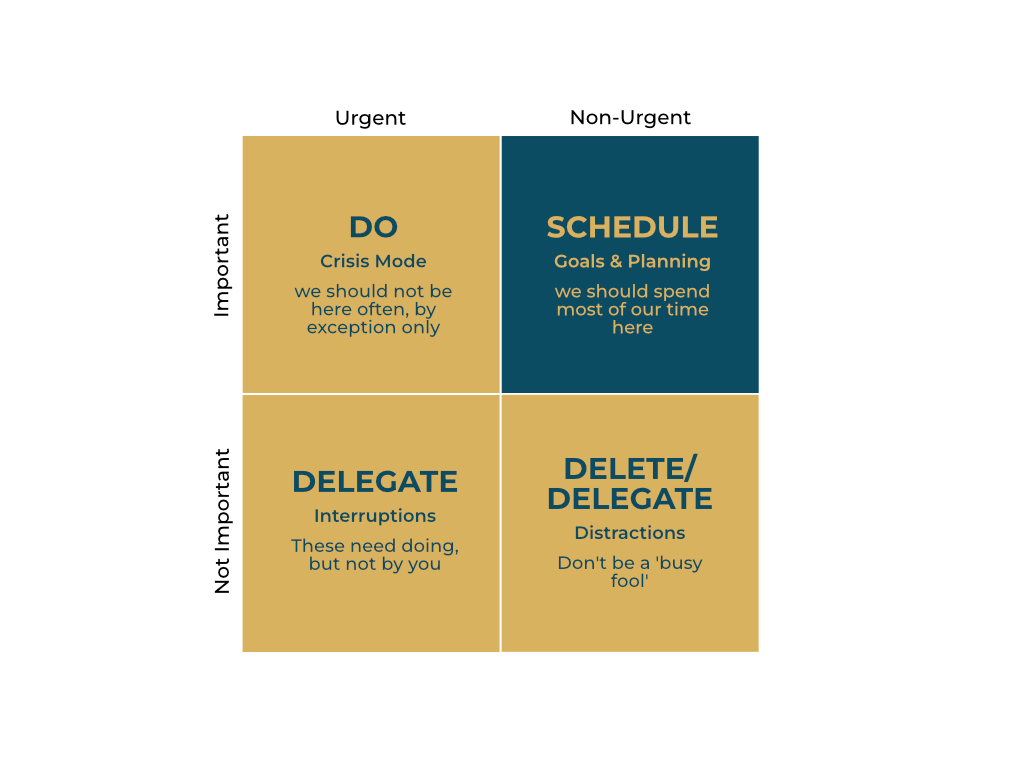
2. Pushing Back (Politely)
Sometimes, delivering at pace means knowing when to say no. If you successfully negotiated a deadline, delegated tasks, or descaled a project to ensure the core objectives were met on time, talk about it. It shows commercial awareness and maturity.
3. Adapting to Change
Projects rarely go exactly to plan. A great answer will often include a hurdle—a team member off sick, a sudden change in client brief, or a tech failure—and how you swiftly pivoted your approach to keep things moving.
4. Quality Control
Always mention how you ensured the final product didn’t suffer due to the speed of delivery. Did you implement a quick peer-review system? Did you test the product in phases?
An Example Answer Outline
Question: “Tell me about a time you had to deliver a high-quality piece of work to a very tight deadline.”
- Situation: “In my previous role as a Marketing Executive, we were given just four days to launch a digital campaign responding to a sudden shift in government regulations, a process that usually takes two weeks.”
- Task: “I was responsible for producing the written copy and coordinating the design assets.”
- Action: “I immediately sat down with the designer to agree on a streamlined process. I prioritised the core messaging first, deferring the ‘nice-to-have’ supplementary graphics. I communicated daily with the legal team to ensure compliance wasn’t compromised by the speed, and I blocked out my calendar for deep-focus work, pausing non-essential emails.”
- Result: “We launched the campaign with a few hours to spare. It resulted in a 20% increase in customer engagement compared to our standard campaigns, and the legal team praised the process for being smooth and error-free.”
Common Pitfalls to Avoid
- Using “We” instead of “I”: Interviewers want to know what you did, not what your team did. Take ownership of your actions.
- Focusing on the stress: Keep the tone positive and solution-focused. Avoid complaining about how unfair the deadline was or how stressed you felt.
- Forgetting the outcome: An amazing story about working efficiently means nothing if the project ultimately failed or the client was unhappy. Always land on a positive, measurable result.